





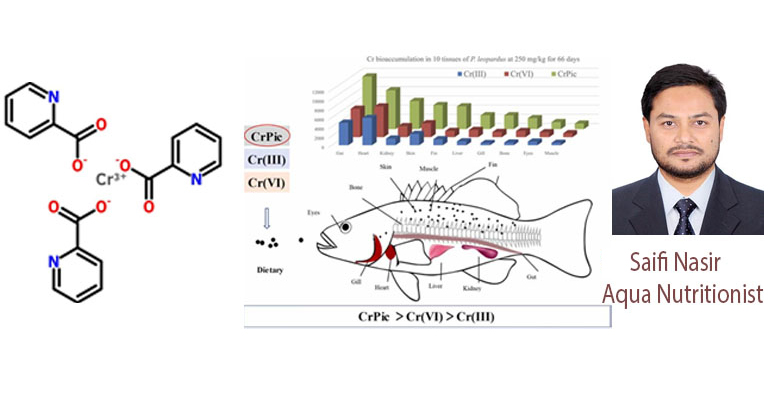
Chromium picolinate (Cr-Pic) is an organic trace mineral supplement that enhances insulin sensitivity and carbohydrate metabolism in fish, allowing them to better utilize dietary starch for energy and sparing protein for muscle growth. Chromium Picolinate is produced by combining two primary raw materials: chromium salts and picolinic acid. Chromium Picolinate in aquatic nutrition is mainly used as a metabolic enhancer and stress-support additive. Chromium picolinate is a highly bioavailable, organic form of trivalent chromium often used as an aquaculture feed supplement to improve metabolism, growth performance, and stress resilience in various farmed fish species. In fish and shrimp, organic chromium is generally more bioavailable than inorganic chromium salts, so smaller doses can be effective.
Why it is important?
Chromium Picolinate (CrPic) is crucial in aqua feed because it enhances insulin sensitivity, which optimizes carbohydrate and lipid metabolism in aquatic species. It improves feed efficiency, promotes faster growth rates, and reduces stress, making it an essential supplement for maximizing aquaculture profitability and fish health. The key benefits of incorporating chromium picolinate into commercial aqua feeds include:
1. Improved Carbohydrate Utilization
Fish typically have a poor ability to utilize dietary carbohydrates, which can lead to prolonged, elevated blood sugar levels. As a vital component of the Glucose Tolerance Factor (GTF), chromium enhances insulin receptor binding. This helps lower serum glucose and cholesterol, allowing fish to utilize dietary carbohydrates and proteins more effectively for energy.
2. Enhanced Growth Performance and Protein Sparing
Aquatic species including tilapia, grass carp, and rainbow trout demonstrate that supplemental chromium can significantly increase body weight and specific growth rates. It induces a "protein-sparing" effect, ensuring that expensive dietary proteins are directed toward muscle building rather than being metabolized for basic energy.
3. Improved lipid metabolism
Organic chromium may reduce excessive fat deposition, Improve liver health and Support healthier hepatopancreas in shrimp. And finally useful in high-fat aqua feeds.
4. Stress and Hypoxia Tolerance
Aquaculture environments are prone to fluctuations in temperature, dissolved oxygen, and stocking densities, which induce stress. Dietary Cr-Pic supplementation helps alleviate the detrimental effects of environmental stressors (such as cold shock or low-oxygen hypoxia) by reducing cortisol and metabolic waste in the blood.
5. Immune and Antioxidant Support
Adding organic chromium to diets boosts the innate immune response and increases the activity of antioxidant enzymes (like glutathione). This results in higher survival rates and improved intestinal morphology, keeping fish healthy without the need for antibiotics.
6. High Bioavailability
Compared to inorganic chromium (which can accumulate and cause toxicity), chromium picolinate is an organic form. Organic trace minerals have a higher absorption rate, allowing for targeted metabolic results at very low, safe dietary concentrations (typically around 0.4 to 0.8 mg per kg of feed). Explain the optimal inclusion rates for specific species (e.g., Tilapia, Shrimp, or Carp). Provide insights on how to balance Cr-Pic alongside other organic minerals for maximum health.
6. Improves Feed Conversion Ratio (FCR)
This is the biggest economic benefit. If fish utilize nutrients more efficiently, it can be occurred less feed is needed per kg fish gain, lower wastage of dietary energy and better conversion of carbohydrates and protein. Since feed is usually 60–75% of production cost, even small FCR improvement matters. Possibility to slightly optimize protein level in formulation because of protein is the most expensive part of aquafeed. More economical formulations.
7. Better survival
In some study it can happened stronger immunity, better antioxidant status and reduced opportunistic disease impact. Even small survival improvement greatly affects profitability. Survival increases 2–4%. Better performance from cheaper energy sources.
How Chromium Picolinate Functions in the Fish Body?
Fish naturally struggle to digest high carbohydrate levels, often suffering from extended, post-meal hyperglycemia. Chromium binds to a low-molecular-weight chromium-binding substance (LMWCr) inside the fish's cells, which amplifies insulin receptor activity. This speeds up the transfer of glucose from the bloodstream into the muscle and liver tissues. By helping the fish's body use carbohydrates efficiently for energy, dietary Cr-Pic reduces the need to break down proteins for fuel. This directly improves protein retention and overall growth. Chromium has been shown to reduce blood cortisol (the primary stress hormone) in fish, protecting them during environmental challenges such as hypoxia and cold winter water temperatures.
Organic forms of chromium (like picolinate or methionine) are absorbed much more efficiently by the fish's digestive tract than inorganic trace minerals like chromium oxide.While Cr-Pic is highly effective at optimal doses, exceeding recommended thresholds can have toxic effects on cellular integrity and liver function. Research suggests that alternative organic sources, such as Chromium DL-Methionine, can achieve even higher bioavailability with zero toxicity in species like carp. Compare Cr-Pic with other organic chromium sources like Chromium Yeast or Chromium Methionine need more study.
What recommendation application in aqua feed
Chromium can help fish metabolically adapt to these diets more efficiently. The picolinic acid ligand helps chromium cross intestinal membranes efficiently. Fish have lower indulin so lower glucose efficiency and always in diabetic. More biological activity at low inclusion rates in aqua nutrition. Actual dosage depends on chromium source potency, species, feed formulation, stress intensity and overuse is unnecessary and may reduce benefit. Most studies on species like Nile tilapia, cat fish and common carp suggest including 1.0 to 1.8 mg of Cr per kg of feed to see noticeable benefits in growth and blood biochemistry.
Why it is considerations for use in aquatic animal
Inorganic chromium sources carry a risk of genotoxicity and are less bioavailable. Organic sources like Cr-Pic are the preferred choice in aqua nutrition. The efficacy of Cr-Pic can vary widely; some studies on rainbow trout report minimal effects on growth performance under standard conditions, indicating that responses depend heavily on species, dosage, and water parameters. By promoting lipogenesis and glycolysis, Cr-Pic supplementation generally results in better feed conversion ratios and increased muscle protein retention.
What is the limitation or side effect for aqua nutrition?
Chromium Picolinate is used in aquaculture feeds primarily to enhance the utilization of dietary carbohydrates and improve stress tolerance. While it is generally safe at recommended inclusion levels and overdosing can cause oxidative stress and organ toxicity. Potential Side Effects and Risks are-
Genotoxicity at High Doses: While organic chromium is safer than toxic hexavalent chromium, excessively high dietary doses have been shown to cause genetic damage to erythrocytes (red blood cells) and organs.
Pro-oxidant Effects: Over-supplementation can lead to oxidative stress, initiating free-radical reactions that can damage fish liver and kidneys.
Conflicting Growth Results: Several studies on species like rainbow trout and some carps indicate that chromium picolinate does not consistently improve weight gain or feed conversion ratios across all species.
References
2. https://pmc.ncbi.nlm.nih.gov
4. https://www.sciencedirect.com
6. https://www.spectrumchemical.com