





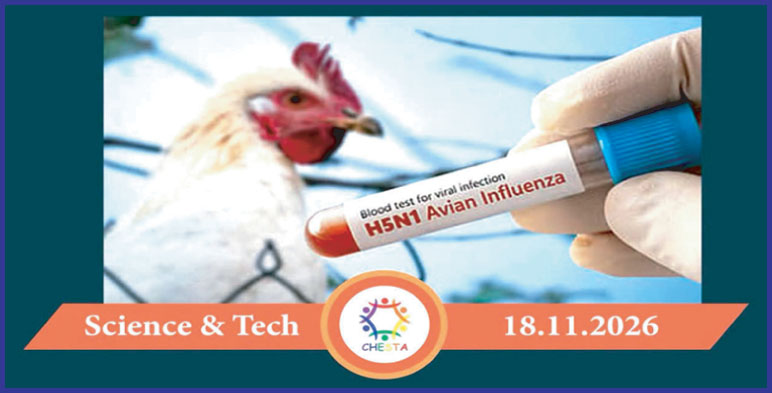
India Develops First Indigenous H5N1 Bird Flu Vaccine for Chickens
ICAR-NIHSAD’s breakthrough targets the highly pathogenic avian influenza virus Clade 2.3.2.1a
Bhopal, India | November 18, 2026
India has achieved a significant milestone in poultry health and veterinary biotechnology with the development of its first indigenous inactivated vaccine against Highly Pathogenic Avian Influenza (HPAI) H5N1 for chickens. The vaccine has been developed by scientists at the Indian Council of Agricultural Research–National Institute of High Security Animal Diseases (ICAR-NIHSAD), Bhopal.
The newly developed vaccine specifically targets H5N1 virus belonging to Clade 2.3.2.1a, a strain associated with major bird flu outbreaks in poultry across India. The development is expected to strengthen the country’s preparedness against avian influenza and support efforts to reduce the devastating economic impact of recurring outbreaks on the poultry industry.
According to an official announcement by India’s Ministry of Agriculture and Farmers Welfare, Union Minister Shri Shivraj Singh Chouhan is scheduled to dedicate the vaccine to the nation on November 20, 2026, at ICAR-NIHSAD, Bhopal.
A Major Advancement in Poultry Disease Prevention
Highly Pathogenic Avian Influenza remains one of the most serious infectious disease threats to the poultry industry. Outbreaks can result in extremely high mortality among infected birds, mass culling, movement restrictions, disruption of poultry trade and substantial financial losses for farmers, producers and allied businesses.
India has reported more than 500 combined outbreaks involving H5N1 and H5N8 avian influenza subtypes since the disease was first detected in the country in 2006. The devastating outbreak in 2006 alone reportedly caused direct and indirect economic losses estimated at Rs. 2,200–3,000 crore.
The H5N1 Clade 2.3.2.1a strain has been identified as a major concern for poultry health. In recent years, infections involving this strain have also been detected in other animal species, including mammals, further highlighting the importance of effective disease prevention and control.
Strengthening India’s Self-Reliance in Veterinary Vaccines
The development of this indigenous vaccine represents an important step towards strengthening India’s domestic veterinary vaccine research and manufacturing capabilities. With no specific commercial vaccine previously available against the H5N1 Clade 2.3.2.1a strain, the new development addresses an important gap in the country’s poultry disease-control preparedness.
The initiative is expected to contribute to improved poultry health protection, enhanced farm resilience and reduced vulnerability to devastating avian influenza outbreaks. It also reflects the growing importance of scientific research, disease surveillance and indigenous innovation in safeguarding the livestock and poultry sectors.
A Promising Outlook for the Poultry Industry
The development of the H5N1 vaccine is being viewed as an encouraging advancement for India’s poultry industry, which continues to face challenges from emerging and re-emerging infectious diseases.
The vaccine’s practical impact will depend on its regulatory status, availability, deployment strategy, vaccination protocols and integration with effective biosecurity, surveillance and outbreak-management measures.
India’s first indigenous H5N1 vaccine for chickens marks a noteworthy achievement in animal health science and offers renewed hope for strengthening the country’s poultry sector against one of its most serious disease threats.
Source: India’s Ministry of Agriculture & Farmers Welfare and ICAR-NIHSAD.